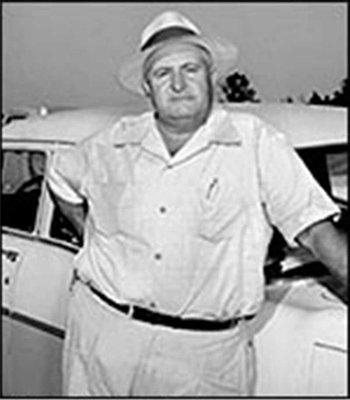
If you had to conjure up the perfect actor to play a bigoted, unscrupulous Southern sheriff, you could do no better than Sheriff Henry Clarence Strider.
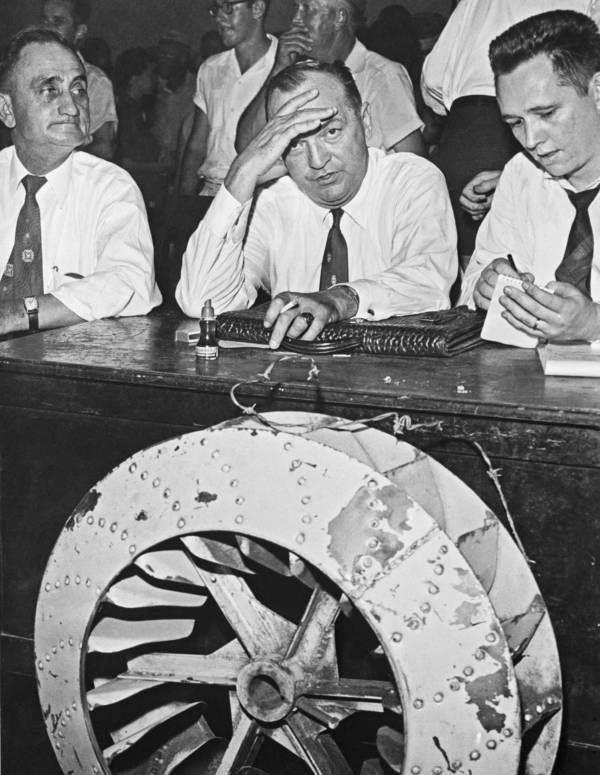
Sheriff Clarence Strider (Source: The Commercial Appeal from PBS American Experience site on the Murder of Emmett Till)
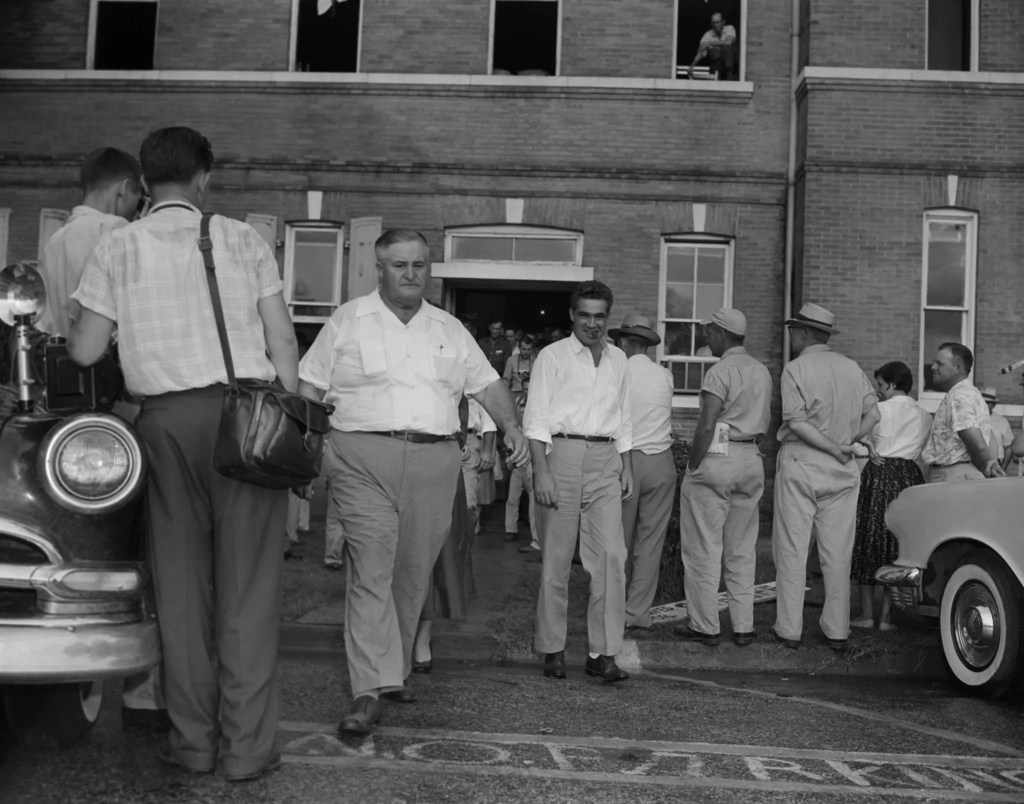
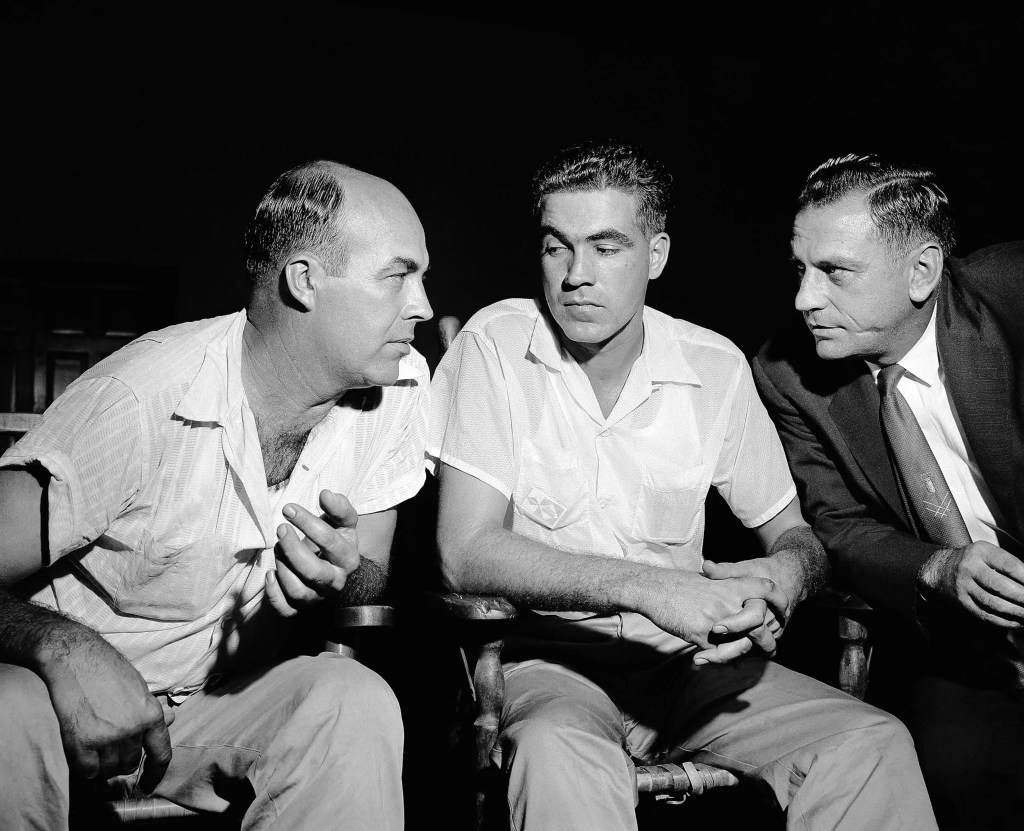
At 270 pounds, “H.C.” Strider made a commanding figure. Wearing collared short-sleeved white cotton shirts, his belt straining around his belly, an oversized blackjack sticking prominently out of the right-hand pocket of his trousers, often with a cigar in hand, he asserted power in every situation. (Tragedy on Trial, page 227) Strider was a wealthy plantation owner, feared by his Black workers. His property could be identified from miles away by the letters S-T-R-I-D-E-R, which he insisted be painted on the roofs of sharecropper’s shacks. (American Experience: Bio Sheriff Clarence Strider) And his badge gave him virtually unchecked power over the law.
Strider took control of Emmett’s body, the murder charges, announcements to the press and the very courtroom where Roy Bryant and J.W. Milam were being tried for murder. His influence on the trial of the two men helped lead to its inevitable conclusion—not guilty.
To understand all the strings Strider pulled and lies he told, we have to go back to the beginning.
Strider Took Immediate Control of the Body
The case of Emmett Till’s kidnapping and murder was complicated by its multiple locales. This meant that several jurisdictions and law enforcement personnel could potentially be involved in investigating and prosecuting the case:
Tallahatchie County: The body of Emmett Till was pulled from the Tallahatchie River in Tallahatchie County, where Sheriff Strider had jurisdiction.
Leflore County: George Smith was the Sheriff of LeFlore County—where Moses Wright’s home was located and where the kidnapping took place.
Sunflower County: The Sheridan plantation, was managed by J. W. Milam’s brother, Leslie Milam, and was located in Sunflower County. Emmett’s beating and torture took place in a barn on this property. (FBI Investigation of February 9, 2006, lists the name of the plantation as the Clint Shurden Plantation, page 97)
Adobe
Although both Strider and Smith appeared at the scene, it was Strider who took control, under the guise that Emmett was shot and killed at the banks of the river in Tallahatchie County—an assertion not yet proven and one that many local Blacks doubted. Dr. T. R. M. Howard, a wealthy physician and Black activist from the area, claimed that the murder likely took place in a barn on the Sheridan plantation. (Tragedy on Trial, page 167)
The murder trial outcome may have turned out differently if the trial had been moved to Sunflower County—or at the very least, more evidence and witnesses might have been brought out during the trial. But the trial went on in Tallahatchie. And Tallahatchie County belonged to Strider.
Strider Acted Quickly to Bury the Body
Once he took control over the murder, though there was not yet proof of where the murder had actually taken place, Strider did the following:
He summoned a Black undertaker to the scene (Tragedy on Trial, page 229)
He signed the death certificate under the name of Emmett Till and described him as a “Negro . . . high school student” born in 1941. Cause of death: “murder.” (Tragedy on Trial, page 229)
As noted on the death certificate, Strider requested the body be sent to the “Avent Funeral Home,” a Black funeral home (Tragedy on Trial, page 229)
He did not order an autopsy (Tragedy on Trial, page 229)
He requested immediate burial of the body (Tragedy on Trial, page 229) and ordered Emmett’s relatives to get his body in the ground by nightfall (American Experience Strider Bio)
From the onset, Strider pushed for a speedy handling of the investigation, which made gathering evidence and finding witnesses difficult for the prosecution (Tragedy on Trial, page 229)
Mamie Till-Mobley Foiled Strider’s Plan to Bury Emmett in Mississippi
The body was first sent to the Century Funeral Home in Greenwood, run by Chester Miller. The staff began preparations for immediate burial, per Strider’s instructions. The grave was being dug. Moses Wright began preparing his eulogy and others readied their funeral clothes. (Blood of Emmett Till, page 65)
But when Emmett’s mother in Chicago learned that her son had been found and would soon be buried in Mississippi, she demanded the body be sent home. Mamie called her uncle Crosby Smith in Sumner, who promised “to get Emmett’s body back to Chicago if he had to pack it in ice and drive it back in his truck.”(Innocence, page 130)
Crosby Smith drove to the cemetery with Chester Miller and one of the sympathetic Leflore County deputies. “[The grave diggers] had got the body out to the cemetery and dug the grave,” Smith recalled. “I got there and had the deputy sheriff with me. He told them whatever I said, went.” Smith told the grave diggers, “’No, the body ain’t going in the ground.’ That body went to Chicago.” (Blood, page 65, from Erle Johnson Papers, University of Southern Mississippi and The Barn, page 279)
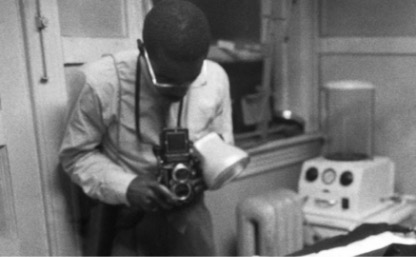
The body was picked up by Chester F. “Chick” Nelson, whose funeral home in Tutwiler embalmed and prepared … Till’s body for shipment back to Chicago ….” (Tragedy on Trial page 140, including Nelson bio info from Anderson’s “Who’s Who in the Emmett Till Case”) The coffin was sealed with the state of Mississippi seal, under the agreement that the casket never be opened.
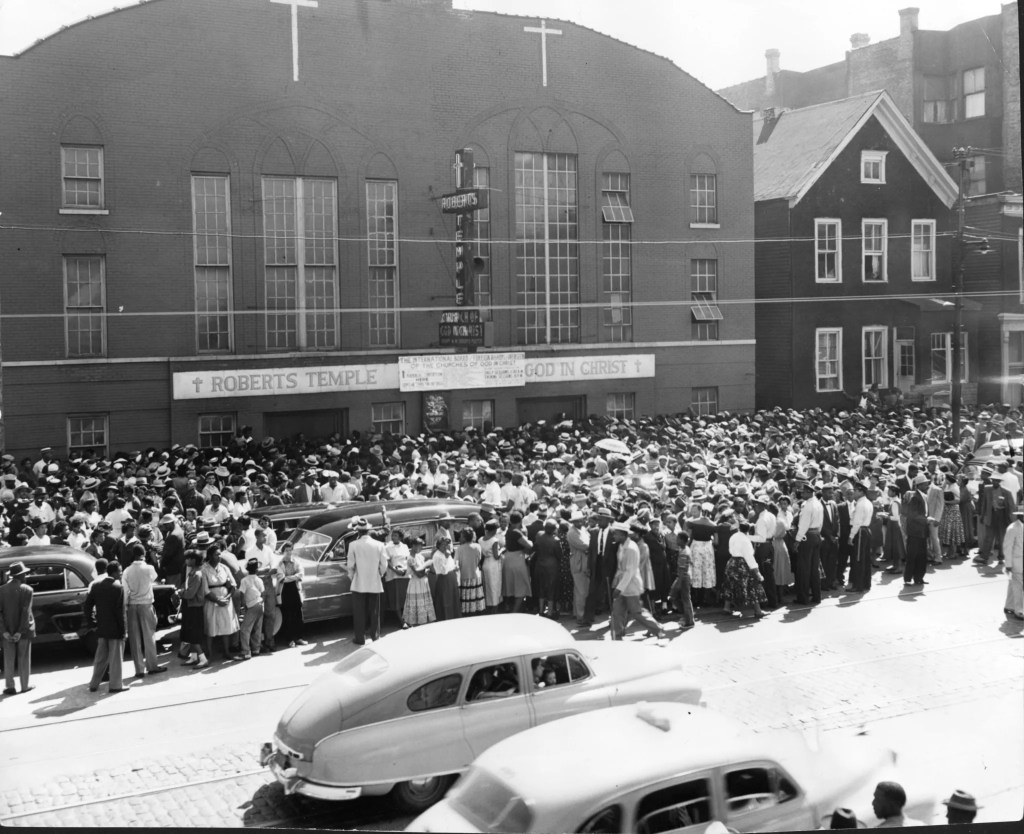
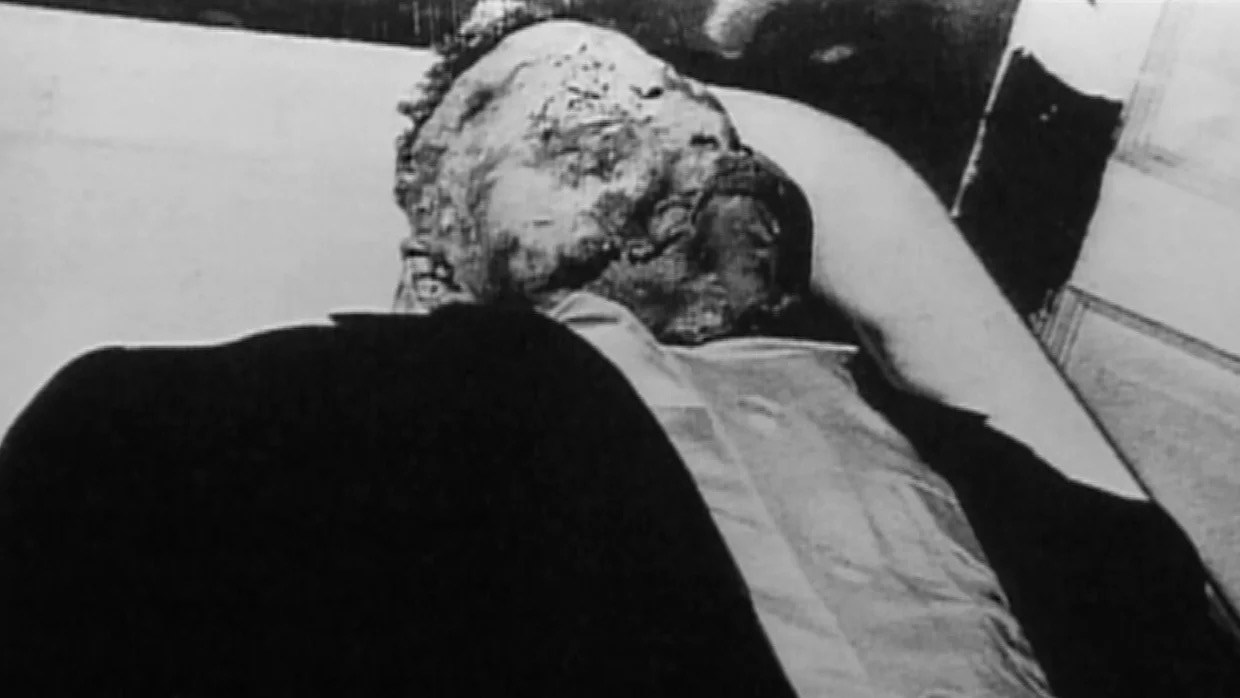
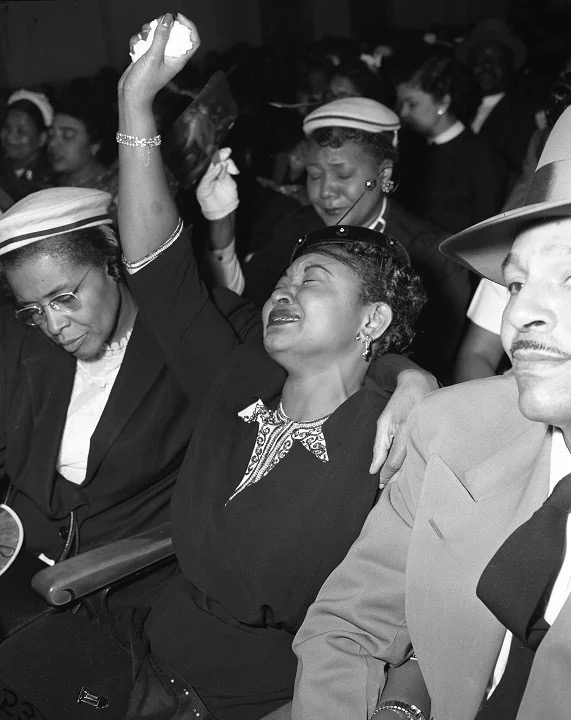
The quick and quiet burial Strider had ordered was not to be. Instead, Emmett’s body would be returned to Chicago, where Mamie would open the coffin, identify the body as her son, and display Emmett’s disfigured body so everyone can “see what I had seen.”
“The whole nation had to bear witness to this. … I knew that if they walked by that casket, if people opened the pages of Jet magazine and the Chicago Defender, if other people could see it with their own eyes, then together we might find a way to express what we had seen. It was important to do that, I thought, to help people recognize the horrible problems we were facing in the South.”
Mamie Till-Mobley (Innocence, page 139)
Many Applaud Mamie’s Actions … But Not Strider
This “spectacle” enraged Sheriff Strider and others in the community. Further, comments from the NAACP stating that “Mississippi has decided to maintain white supremacy by murdering children,” and that Emmett’s murderers felt “felt free to lynch him” because of the racist climate that state leaders there had accepted (Innocence, page 144), began to change the general sentiment about the trial.
While previously, many local and state newspapers and officials had come out to condemn the actions of Bryant and Milam and support a just trial for the atrocity, the implication that all of Mississippi was in support of the murder drew the ire of state residents. Normally, they wouldn’t have supported low-class whites (deemed “peckerheads”), but they felt their whole state and whole way of life was on trial.
Newspaper writers and politicians warned that “outside agitators” were threatening the outcome of the case. This infuriated Mamie. She felt that she, and others like the NAACP, were only pushing for the conviction of two murderers; and, further, that fair-minded people wouldn’t make a decision out of spite, just to make a point to outside agitators—unless they were really not fair-minded to begin with. (Innocence, page 150) She felt a right to speak out, a duty to agitate. It was not Milam and Bryant on trial—it was the state of Mississippi against the state’s critics. She realized then that her son’s murderers might go free, yet she prepared to go to Mississippi for the trial.
“They had brought the worst of Mississippi right to our Chicago doorstep and I was going to take a little Chicago right back to them. ‘Someone is going to pay for this,’ Mamie declared. ‘The entire state of Mississippi is going to pay.'” (Innocence, pages 150-151)
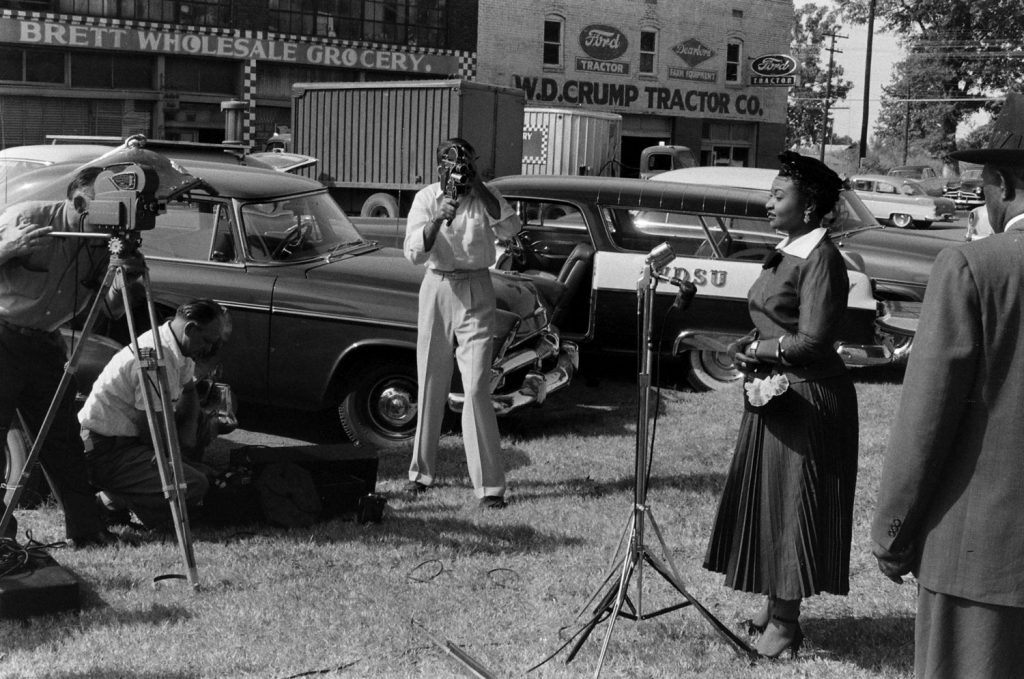
Mamie Till-Mobley speaks to the press during the trial of her son’s murderers. (Ed Clark, Life magazine/Shutterstock)
Strider Casts Doubt as to the Identity of the Body
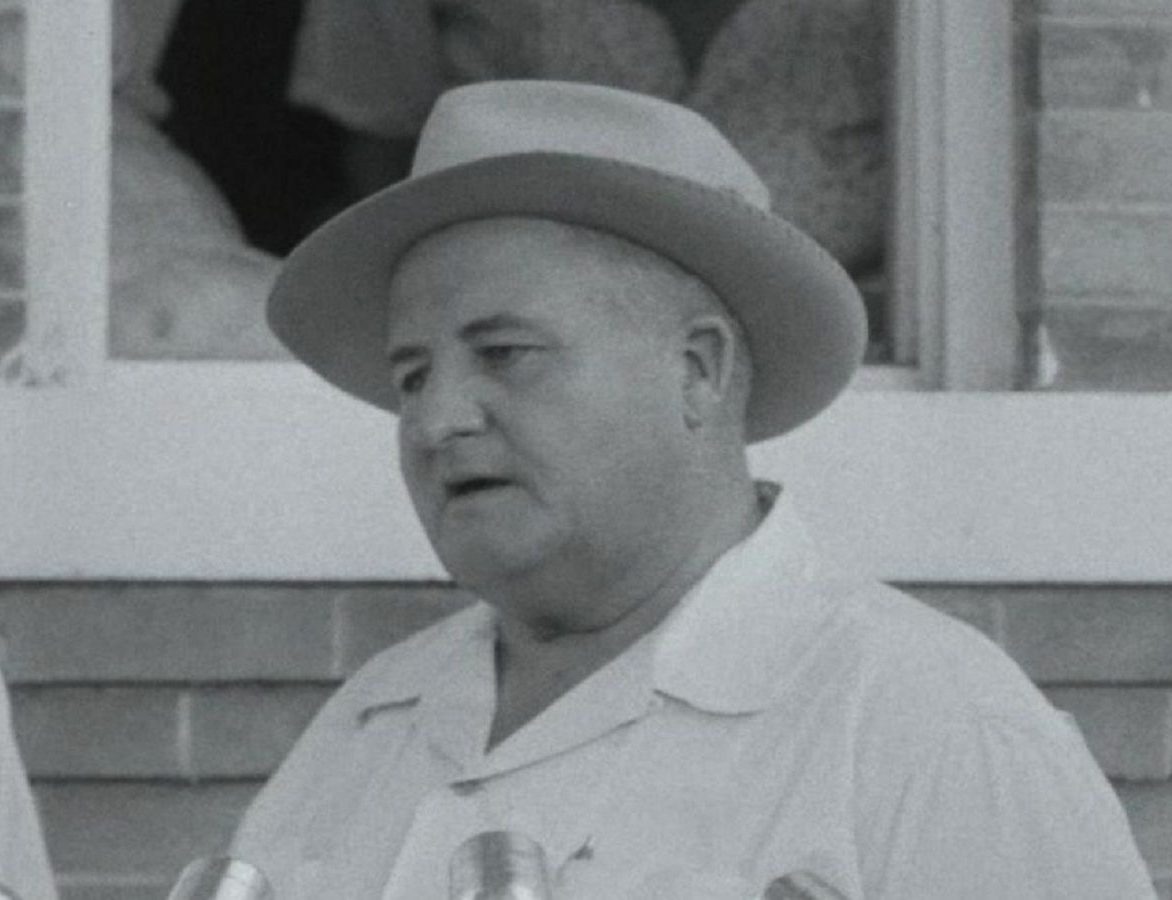
Shortly after the body was discovered, Strider said that the body had “been in the water about two days. ”(Tragedy page 228) He also signed the death certificate in the name of Emmett Till, identifying him as Negro, and sent the body to a Black undertaker. But, shortly thereafter, Strider flipped and said he did not know if the body was white or Black. (Tragedy on Trial, page 229, quoting Devery Anderson in 2016 interview) As national and international condemnation grew, Strider continued to cast doubt that the body was that of Emmett Till, telling reporters on September 3, 1955 that owing to the condition of the body neither its identity or race could be established. “The body we took from the river,” he stressed, “looked more like a grown man instead of a young boy. It was also more decomposed than it should have been after a short stay in the water.” (Tragedy on Trial page 229, quoting the Jackson Daily News)
Sheriff Strider during a press briefing (Source: ABC News – Good Morning America)
Further, Strider floated a conspiracy theory that “[t]he whole thing looks like a deal made up by the National Association for the Advancement of Colored People.” (Tragedy on Trial, page 228, quoting newspaper articles “Sheriff Says Body Found May Not Be Chicago Boy,” Richmond Times-Dispatch (AP), September 3, 1955; and “Sheriff Believes Body Not Till’s: Family Disagrees—Mother ‘Positive’ It Was her Son,” Clarion Ledger, September 4, 1955, p. 1) Strider’s implication that “the killing might have been planned and plotted by the NAACP,” was ludicrous. (Strider quote from Innocence, page 144) It implied that the NAACP had itself killed Emmett or had planted a body for discovery—a body wearing Emmett’s ring—all to implicate southerners for murder and racial injustice.
The most infamous of Strider’s quotes is his statement regarding Northern interference in their way of life—a sentiment likely held by others in Mississippi, but never so publicly stated, especially by a member of the law enforcement community:
“We never have any trouble until some of our Southern [expletive]s go up North and the NAACP talks to ’em and they come back home. If they would keep their nose and mouths out of our business we would be able to do more when enforcing the laws of Tallahatchie County and Mississippi.” (American Experience Bio Sheriff Strider and other sources)
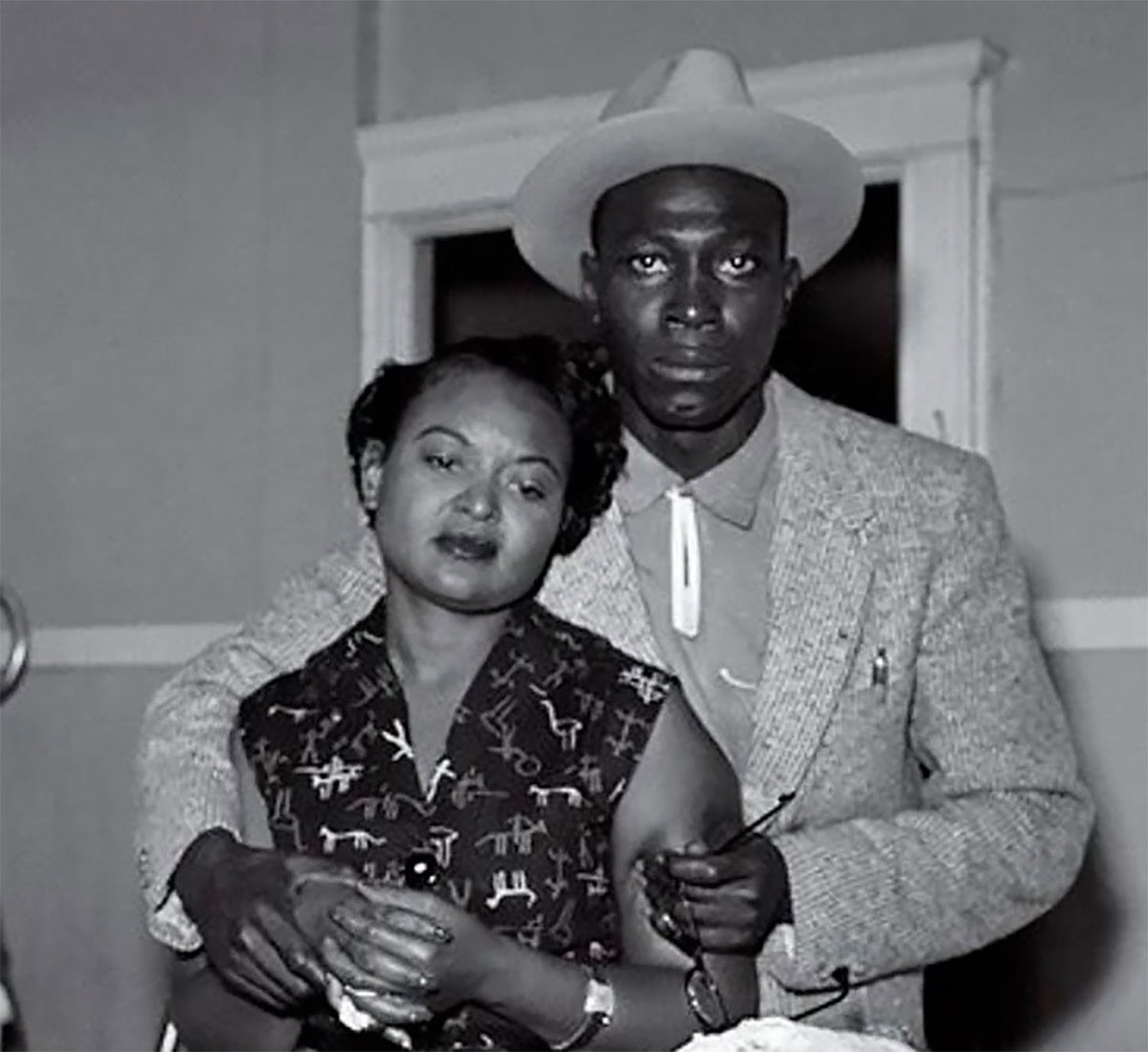
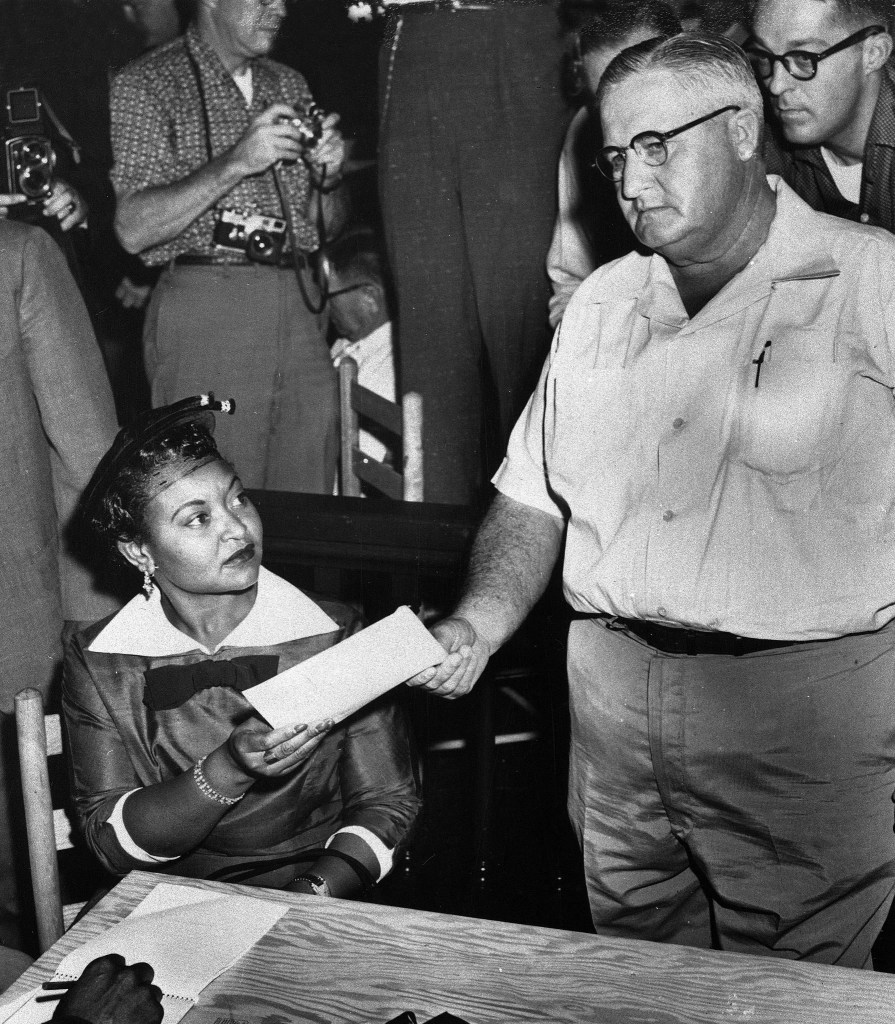
Mamie Till Bradley, the mother of Emmett Louis Till, receives a subpoena from Sheriff H.C. Strider on Sept. 20, 1955, in a courtroom in Tallahatchie, Miss., for her to appear as a witness in the trial of two white Mississippi men accused of murdering her son. Roy Bryant and his half-brother J.W. Milam were acquitted by an all-white jury in 1955. Bryant and Milam confessed to the killing in a 1956 Look magazine article. https://www.nydailynews.com/2022/03/30/remembering-the-life-and-death-of-emmett-till/
Strider Helped Vet Jury Members to Give the Defense a Favorable Outcome
The defense attorneys, in no small measure assisted by Sheriff Strider and Sheriff-elect Harry Dogan, knew enough of the jurors personally to be confident of acquittal. (The Blood of Emmett Till, Timothy B. Tyson, page 130)
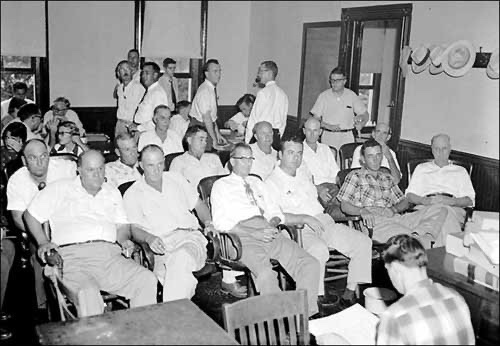
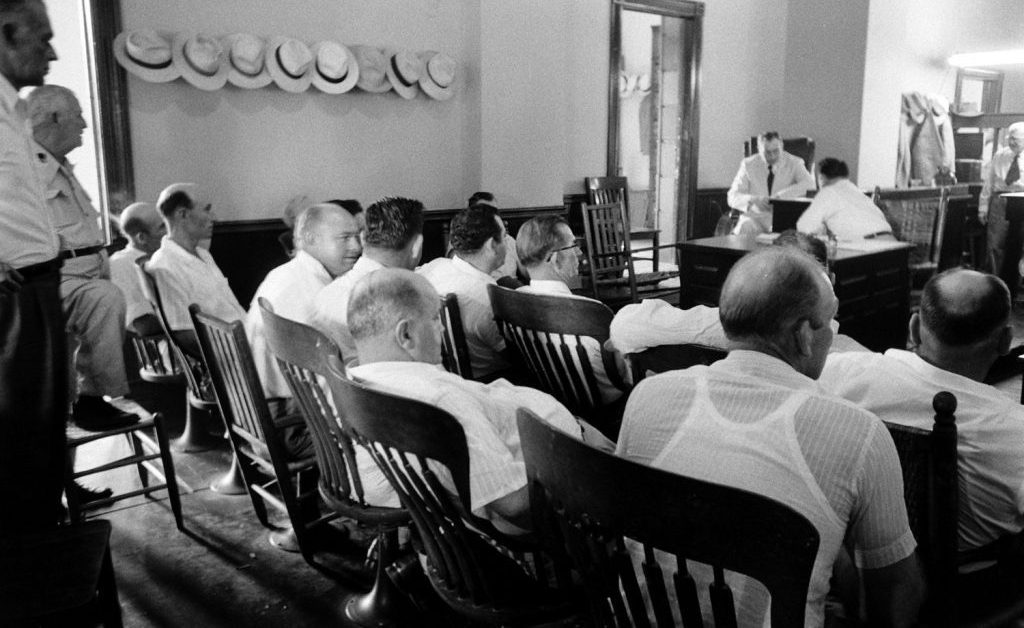
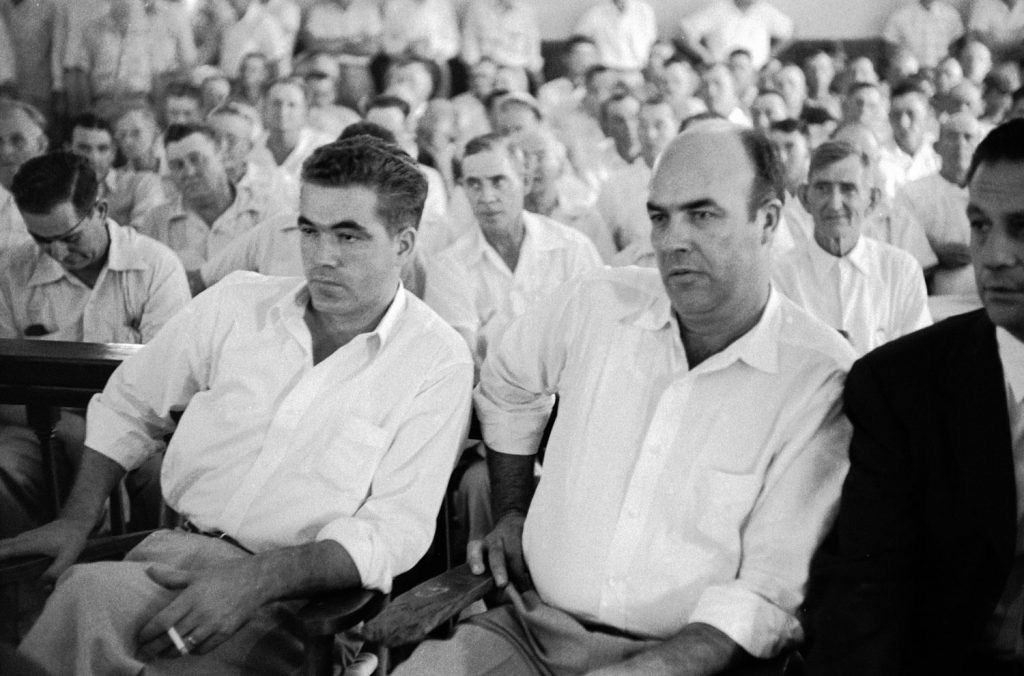
Jury members at the murder trial of Roy Bryant and J.W. Milam. The courtroom was packed to capacity during the trial with predominantly white faces. (Sources: Ed Clark, Life Pictures/Shutterstock, AP photo of back of jurors)
Strider Bullied Blacks at the Tallahatchie Courthouse in Sumner Mississippi
Strider tried to invoke his power on the Sumner courtroom where the trial was taking place. He segregated the courtroom into Black and white. He tried to exclude Black journalists from the courtroom altogether, but was overruled by Judge Swango. So instead, Strider relegated the Black reporters and Detroit Congressman Charles Diggs to a card table on the sidelines. Strider greeted them each morning as he passed with a cheery, “Hello [expletive]s.” (PBS Newshour The Murder of Emmett Till)
In a PBS news story aired years after the trial, Ernest Withers quoted Strider as laying out that “we got 22 seats over here for you white boys, and we got four seats over here for you colored boys. We don’t mix them down here. We ain’t going to mix them, and we don’t intend to. You ain’t going to be with the white folks, and the white folks ain’t going to be with you, and y’all might be ….ain’t going to be no love nest between black and white folks.”(PBS Newshour The Murder of Emmett Till) Withers was the photographer who snapped the famous photo of Moses pointing at Milam and Bryant in the courtroom, identifying them as the pair that had kidnapped his grand-nephew Emmett.
As the Lead Law Enforcement Officer, Strider Testified for the DEFENSE
In an unprecedented move, Sheriff Strider testified in defense of the accused murders. This was highly unusual—Sheriffs and other law enforcement officials typically worked with prosecutors to gather evidence and identify witnesses to help prove the guilt of those charged. Strider never assisted the prosecution, and seemed to go out of his way to undermine their efforts.
In the trial testimony, Strider said many things that cast doubt on the race/identity of the body, even recanting that he had identified Emmett Till on the death certificate he had signed. Strider testified to the following:
He denied he had signed the death certificate for Emmett Louis Till, saying he had only certified that it was a dead body, NOT Emmett’s body, imploring that he had never met Emmett Till so how could he know what he looked like (Tragedy on Trial, page 235, citing trial transcript)
He denied he could tell if it was a Black or white person, with the only identifying feature the kinky hair, and “I have seen white people with kinky hair” (Tragedy on Trial, page 233, citing trial transcript)
He denied that he could identify if there was a bullet hole in the head, and “couldn’t identify where it penetrated into the skull” (Tragedy on Trial, page 237, citing trial transcript)
He gave the opinion that, based on the decomposition of the body, it had been in the river “at least ten days, if not fifteen,“ (Tragedy on Trial, page 233, citing trial transcript), which would imply that it couldn’t be the body of Emmett Till as he has only been missing for three days at the time of the body’s discovery
When asked if he could identify if the body was of any particular person, he stated “Well, if one of my boys had been missing, I couldn’t really say if it was my own son or not, or anybody else’s. I couldn’t tell that. All I could tell, it was a human being.” (Tragedy on Trial, page 234, citing trial transcript)
Strider’s opinions were backed up by two “experts.” Dr. L.B. Otken, a general practice medical doctor who had viewed the body at the request of the sheriff’s office of Sheriff George Smith, said the body had been dead eight to ten days and that he could not say for sure whether injuries found on the body were caused before or after death—this despite the fact he did not actually touch the body, never examining it up close or performing any pathological examination. (Tragedy on Trial, pages 239-240 and 242-243) H.D Malone, the embalmer who worked on the body, said the body was so bloated and swollen that it was beyond any possible recognition, and had likely been dead ten days or longer. (Tragedy on Trial, pages 252-253, citing trial transcript)
In his closing remarks, Prosecutor Robert Smith did note that Malone had not personally embalmed the body so was not in a position to judge either its condition or the amount of time it was in the river, but did not go as far as to suggest who might have actually performed the embalmment. (Tutwiler Funeral Home Till Memory Project) Many believe that Till’s body was actually prepared by Malone’s Black assistant Woodrow Jackson, which was confirmed by multiple sources in personal interviews with Jackson well after the trial had ended. (Remembering Emmett Till, pages 151-152 and Emmett Till Memory Project)
Yet, the combined testimony of these three witnesses during the trial created the necessary doubt that the body was Emmett’s, giving the jury another reason—or excuse—to offer its ultimate verdict.
Strider Likely Tampered with Witnesses
Defendants Bryant and Milam confer with J.W. Kellum, one of their five attorneys, Sept 6, 1955.
Rumors circulated during the trial that Strider had hidden prosecutor witnesses Levi “Too Tight” Collins and Henry Lee Loggins in another jail under false names to prevent them from testifying—two Black men that potentially were seen by Willie Reed in the truck bed with Emmett the morning of the murder. The two men had essentially disappeared, despite prosecutor attempts to locate them. Chatham had questioned Strider on this point, but Strider had denied it was true.
However, in 1962, Stephen Whitaker interviewed J.J. Breland, the top attorney for the defense, on this point. Breland confirmed the rumors were true:
“Unknown to the District Attorney or special prosecutor Smith, these Negroes were held under false identities in the Charleston jail on the orders of Sheriff Strider, prior to and during the entire trial,” said Breland. (A Case in Southern Justice, Thesis, Whitaker, page 150)
Others Were Suspected of Participating in Emmett’s Murder
There were actually four Black men suspected of taking part in the kidnapping/murder by potentially holding Emmett down in the truck bed and witnessing the murder: Henry Lee Loggins, Levi Collins, Willie Hubbard and Otha Johnson. (Tragedy on Trial, page 320) All four men worked for Leslie Milam, and most likely were coerced into assisting in the crime. A Tri-State Defender, Memphis, Tennessee, article dated October 8, 1955, published a question-and-answer interview of Collins stating he worked for Milam and was sent by Milam’s brother-in-law, Melvin Campbell, to Clarksdale on a job with Loggins driving a gravel truck during the time of the trial. (coldcaserecords.gov 1955-08-28 Emmett Till) Throughout his life, Loggins continued to deny his presence at the crime scene. Yet, on his deathbed, Otha Johnson confessed to his son of his involvement. (Tragedy on Trial, page 320)
As far as the white men who participated, many believe that Roy Bryant and J.W. Milam were not alone. It is almost certain Leslie Milam, J.W.’s brother, was present. Carolyn Bryant told her family that her brother-in-law Melvin Campbell was there and actually pulled the trigger. J.W. Milam told an acquaintance that a man named Hugh Clark was there. After the murder, Carolyn was heard saying that Elmer Kimbell, an associate of J.W. and Roy, was also present. Kimball’s son may also have been there. (The Barn, pages 264-265) Yet none of these individuals was brought to testify.
An Autopsy was Not Performed Until Decades Later
State laws typically require autopsies in cases of sudden, suspicious or violent deaths, including homicides. In Mississippi today, an autopsy may be ordered by a circuit judge, chancellor or county judge of the county or district where a person died and where his/her body was found if the petitioner believes the deceased person came to his death by some criminal means or agency, or that the cause of justice would be promoted by having an autopsy performed. (Mississippi Code Re: Autopsies and Autopsy Laws by State.)
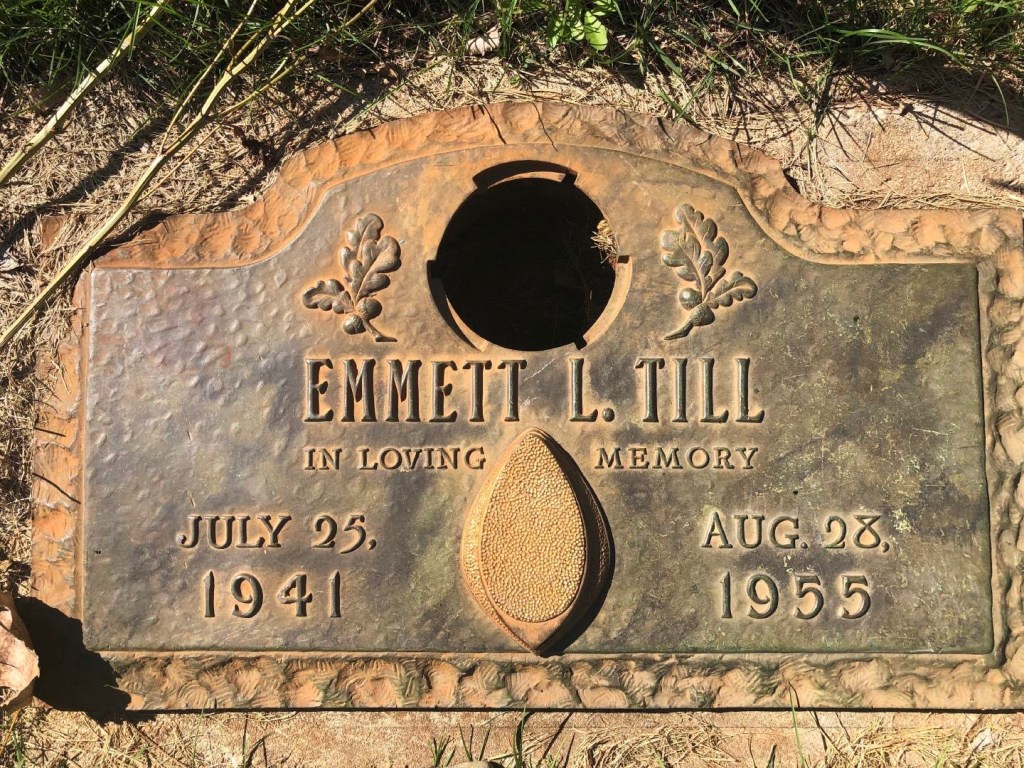
Emmett Till gravesite (Source: Dave Tell, Emmett Till Memory Project)
As of this post, the author was unable to determine the date when it became mandatory for autopsies to be performed on victims of suspected homicides in Mississippi. It is possible that an autopsy of Emmett Till’s body was not required in 1955, though it does beg the question of why the state prosecutors in the case did not request one, or why the state’s medical examiner or coroner did not require one when criminal activity had clearly taken place.
When the Till case was re-opened in 2004, an autopsy positively identified the body as that of Emmett Till. His mother, Mamie, had never doubted it.
The autopsy showed the severity of the beating Emmett had endured—two broken wrists, a broken femur, multiple comminuted skull fractures (caused by impact) and a gunshot wound to the head leaving lead fragments and metallic deposits. The shot was determined to be the ultimate cause of Emmett’s death.
The autopsy deemed it a murder. Just as Sheriff H.C. Strider had originally noted on the death certificate he had filled out in 1955 under the name of Emmett Till.
 Tamara Tabel